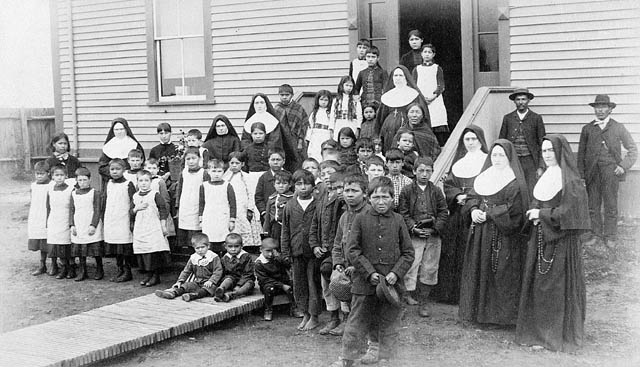
I’ve lived in Canada all of my adult life and worked in the education system for decades, but I wasn’t aware of the history and issues impacting Indigenous People until very recently. I am grateful for the patience of an Indigenous student teacher who began my education 7 years ago. She taught me about land acknowledgements, the water crisis and the education crisis. I had no idea about missing and murdered Indigenous women and girls, or about residential schools, at that time. As we observe the National Day for Truth and Reconciliation this week, I am reminded to keep adding to my understanding.

Just The Start

As a settler living on stolen land, I wonder what I can do to make amends for the benefits that I have enjoyed at the expense of the Indigenous people who lived, and still live, on these lands.
I acknowledge that I am in Treaty 13 and Williams Treaties territory. It is the traditional territory of many nations including the Mississaugas of the Credit, the Anishnabeg, the Chippewa, the Haudenosaunee and the Wendat peoples. It continues to be the home of many First Nations, Métis and Inuit people.
Researching whose land I live on and acknowledging it, is just a start. Wearing an orange shirt to recognize residential school survivors and those who died, is also just the beginning of the journey.
What Are Some Other Things Settlers Can Do?
- Purchase items from Indigenous-owned companies (see links below).
- Read books from Indigenous authors to learn more about Indigenous perspectives and history.
- Participate in Indigenous-led water walks, go to a pow wow or visit an Indigenous art collection.
- Seek out the Indigenous history of the towns and areas that you visit.
- There are 94 Calls To Action created by the Truth and Reconciliation Commission in 2015. You can read about them and hold the government accountable for them.*
- Expand your education with a free, 12 week on-line course offered by the University of Alberta, called Indigenous Canada. **
- Consider donating to Indigenous-led initiatives that support First Nations, Métis and Inuit people. The non-profit foundation Nii’kinaaganaa has a programme called Pay Your Rent. ***
How are you participating in reconciliation? Comment below.
Indigenous t-shirts and street wear:
*https://www.rcaanc-cirnac.gc.ca/eng/1524494530110/1557511412801
**https://www.coursera.org/learn/indigenous-canada
***https://payyourrent.ca/payyourrent

 Retired, And Now What?